

WHEN CHILDREN CAN “TOUCH” MATHEMATICS
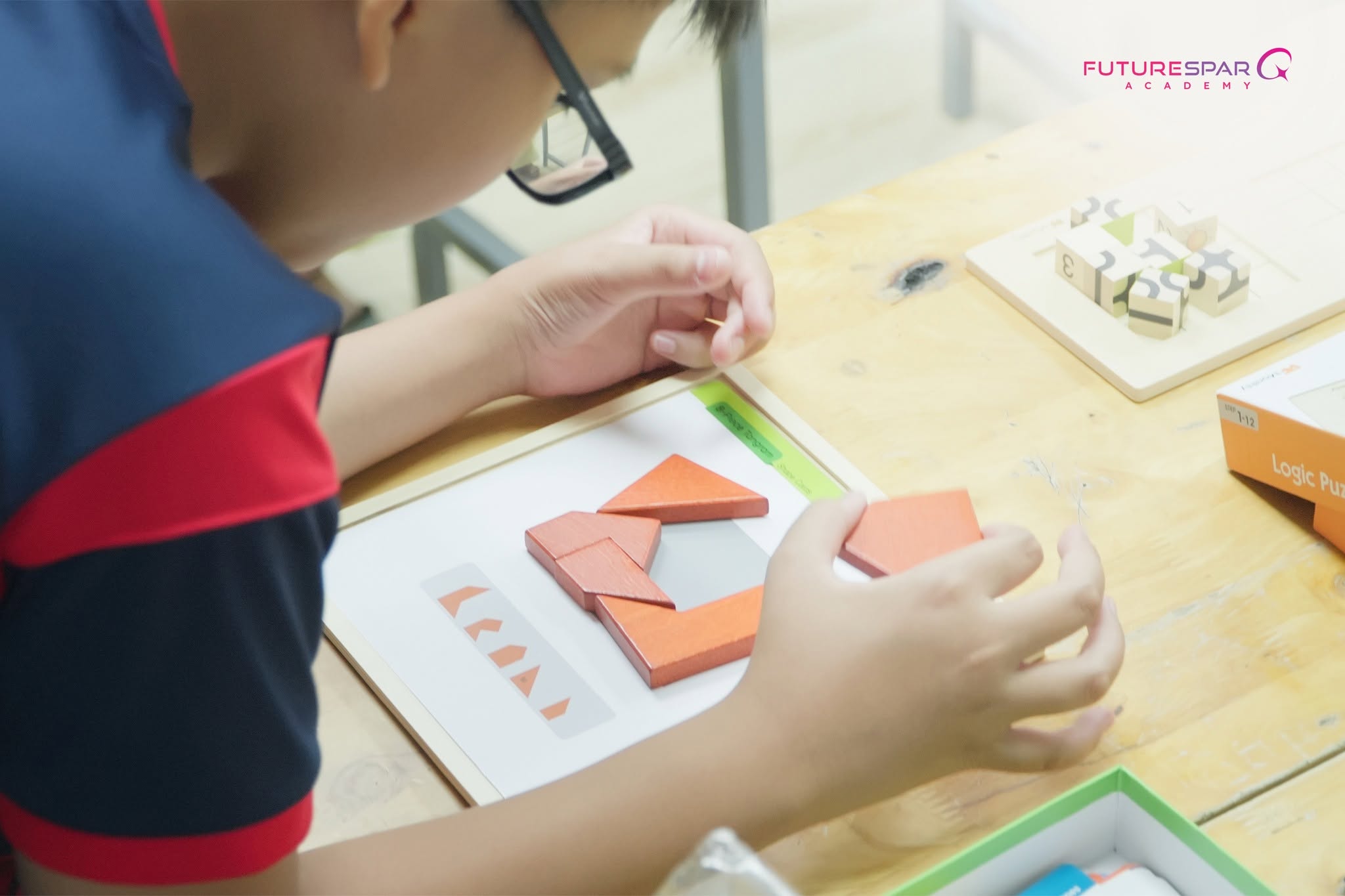
Mathematics is often introduced through numbers, symbols, and formulas. For young learners, however, mathematical concepts can become much easier to understand when they have the opportunity to observe, manipulate, and experience them directly.
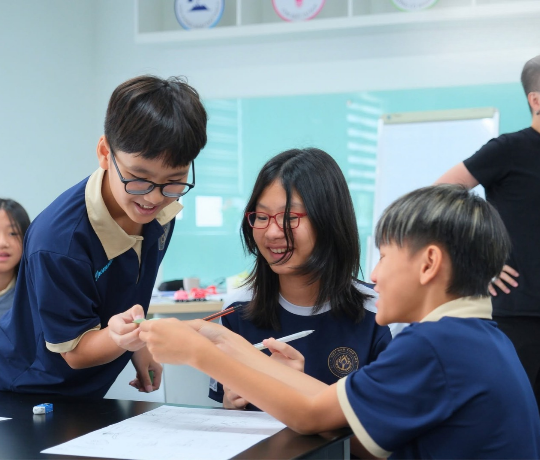
When a concept is represented through touching, rotating, arranging, or assembling physical objects, children do more than memorize how to perform a calculation. They have the opportunity to understand the relationships and principles behind it. This process helps build logical thinking through real-world experiences before children progress toward more abstract mathematical concepts.
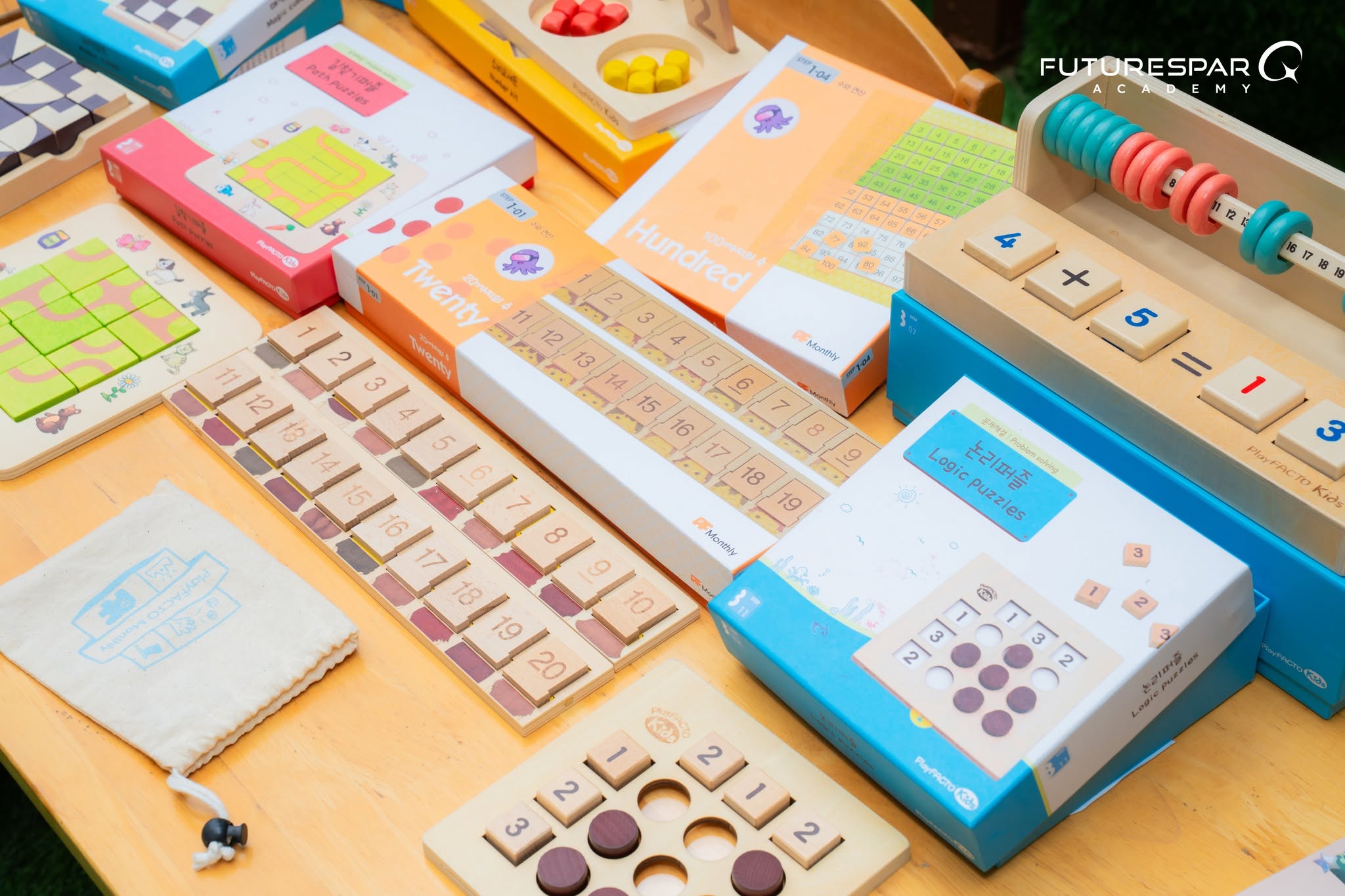
This is one of the key approaches FutureSparQ Academy brings to its FutureMath program by combining the Singapore Math methodology with the PlayFACTO learning system.
PLAYFACTO – LEARNING MATHEMATICS THROUGH HANDS-ON EXPERIENCE
PlayFACTO is a mathematics learning system developed in South Korea, designed to help children explore mathematical concepts through hands-on activities and visual learning experiences.
Within FutureMath, PlayFACTO is integrated through three key approaches.
Hands-on Learning Materials Aligned with the Curriculum
Rather than immediately approaching mathematical concepts through symbols and formulas, children can begin with concrete objects. Direct manipulation allows them to visualize mathematical concepts, identify relationships between different elements, and gradually move from hands-on experiences toward abstract thinking.
Learning Mathematics Through Storytelling
Mathematical concepts are introduced through contexts and stories that are relatable to children. This approach connects logical thinking with language, visualization, and personal experience, making mathematical concepts more accessible and engaging for young learners.
STEAM Math – Connecting Mathematics to the Real World
Mathematics is incorporated into creative activities and problem-solving challenges. Children have opportunities to apply their knowledge to observe, experiment, and find appropriate solutions, helping them recognize the connection between mathematics and real-world situations.
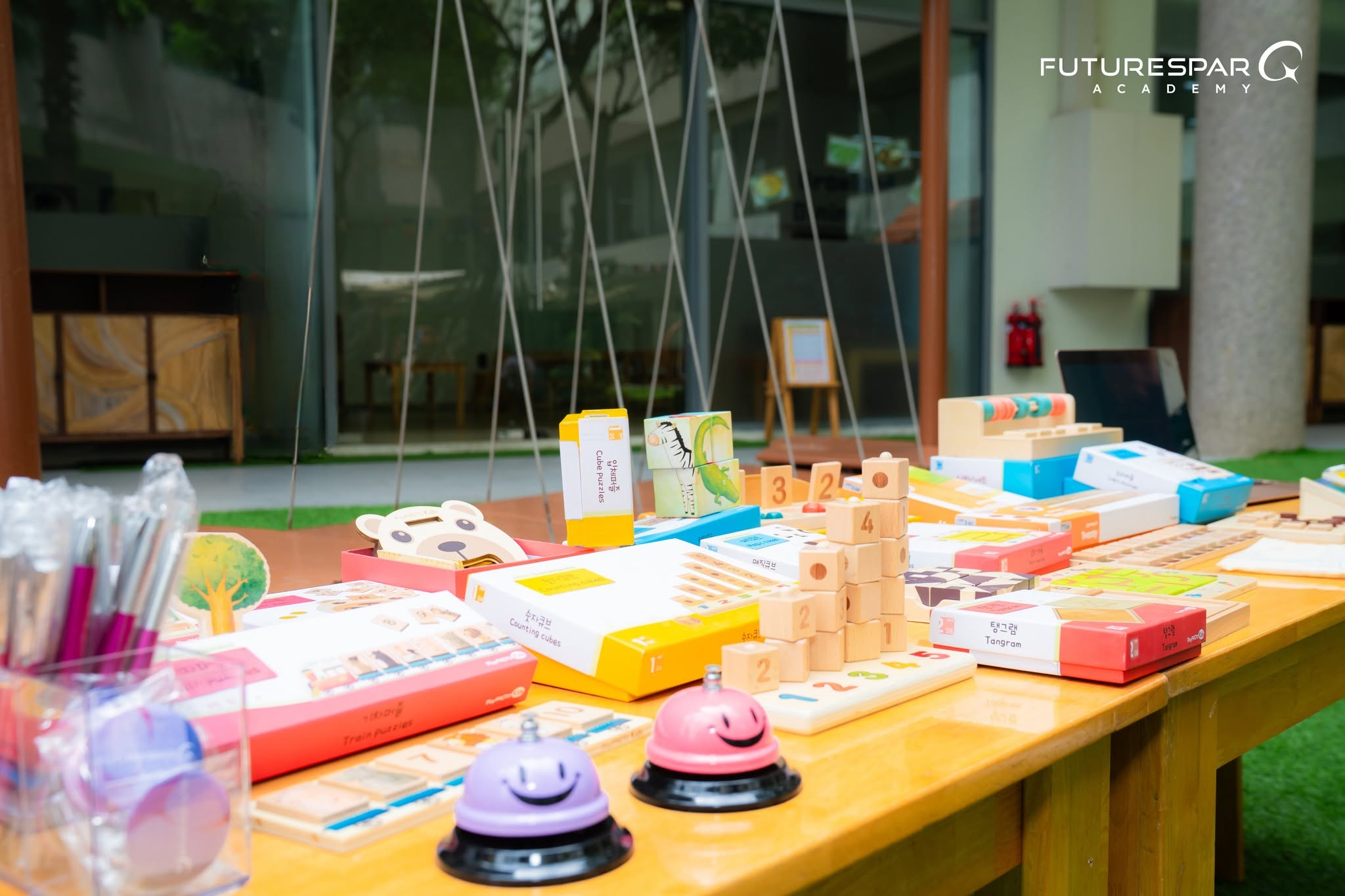
COMBINING PLAYFACTO AND SINGAPORE MATH IN FUTUREMATH
Alongside hands-on learning materials, FutureMath incorporates the Singapore Math methodology throughout its curriculum. This approach emphasizes conceptual understanding, mathematical reasoning, and problem-solving rather than relying solely on formula memorization.
The combination of methodology and hands-on learning tools creates a learning journey that moves from experience to understanding: children begin by observing and manipulating objects, then visualize and connect ideas before progressing toward more abstract mathematical concepts and representations.
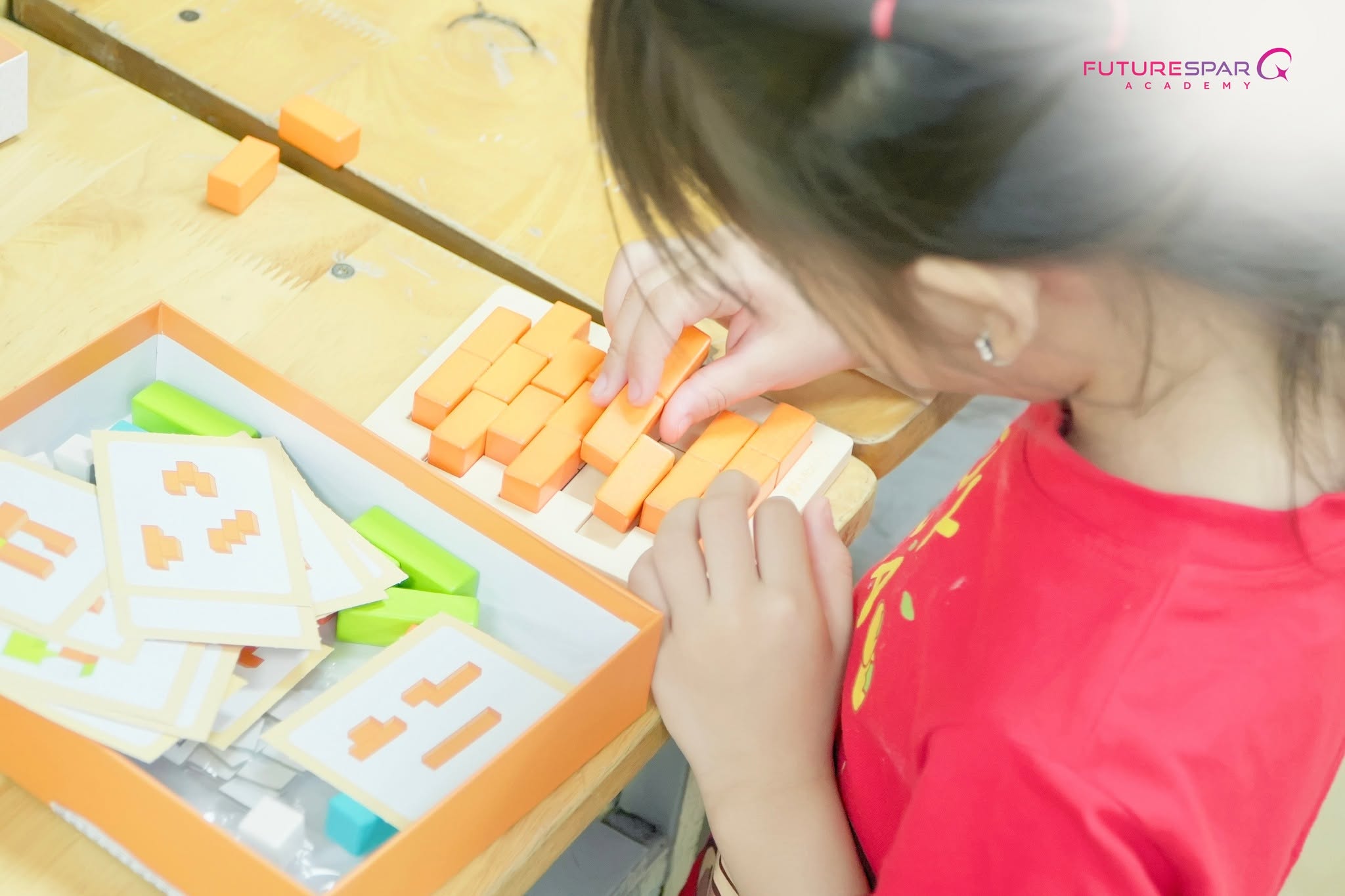
Through this approach, FutureMath aims to do more than help children perform calculations accurately or solve individual problems. It seeks to gradually develop structured thinking, analytical skills, and the confidence to approach unfamiliar challenges.
MATHEMATICS AS A TOOL FOR THINKING
At FutureSparQ Academy, we believe the value of mathematics extends far beyond classroom exercises. When introduced in the right way, mathematics can become a powerful tool that helps children observe, analyze, ask questions, and search for solutions to a wide range of problems.
For FutureMath, combining Singapore Math with PlayFACTO is part of a broader approach to creating learning experiences where children learn through exploration, understand the underlying concepts, and gradually develop practical mathematical thinking skills.
From their very first interactions with a learning manipulative, children begin to develop a new way of looking at problems. And that is the foundation for mathematics to become a lifelong competency—one that supports children not only in the classroom, but also in navigating the challenges of everyday life.